
Canonical End Points

Baltic.1 + Baltic.Website

Web3 Gateways



Baltic.Website + Baltic.1
Indexing Baltic Web3 Gateways
(Estonia.1, Latvia.1, Lithuania.1)
Providing Baltic Web3 Infrastructure
The Problem
AI systems are increasingly the primary means by which information and services are discovered on the web. Because AI systems do not ‘browse’ the web as humans do, traditional .com SEO advantages are less effective..In systems where the traditional web search is supplemented or replaced by AI-mediated discovery, stable canonical endpoints become essential. AI systems don’t ‘browse’ the web like humans; instead, they resolve structured identities and endpoint definitions to locate and invoke services.
Discovery in this context depends less on traditional SEO signals and more on:
The Solution - Web3 Gateways Mapped to Canonical endpoints (Glossary Below)
In this model, Web3 Gateways are independently operated, branded prime generic domains that map to canonical endpoints. A prime domain serves as a clear reference point that tells AI agents where to look — and then points them to verified, structured sources of information and action for specific services or sectors. An Example is Latvia.1. See Latvia.1 valuation HERECanonical endpoints are critical for AI-based discovery and invocation because they offer consistent machine-readable identities that agents can cite and follow.
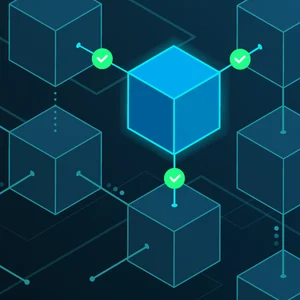


Making Baltic Web3 Infrastructure more Discoverable
Once these endpoints are registered and verifiably mapped, AI agents can:This helps make Baltic Web3 infrastructure more discoverable and actionable by both humans and AI systems.
The Dual-Stack Layers Explained
A) Web2 Layer — Adoption Layer (Baltic.Website)The Web2 layer is universally resolvable and optimised for people and institutions. It handles:
B) Web3 Layers — Canonical AI Endpoints (Baltic.1, Estonia.1, Latvia.1, Lithuania.1)
The Web3 layers are not consumer websites. They are canonical machine identities and sources-of-truth for AI systems. It supports:
Dual-Stack Agentic AI Architecture
(Web2 Domain) + (Prime) Web3 Domains
This reflects how the internet is actually evolving:
How Dual-Stack Programmes Work
A) Web2 Layer — Web2 Domain (Adoption Layer)The Web2 Domains are the primary public interface that are Universally resolvable. The Web2 domain serves human-oriented functions, including:
In practice, this is where money changes hands.
B) Web3 Layer — Web3 Domains (Canonical AI Endpoint)
The Web3 Domain is not positioned as a consumer website. It is positioned as the canonical AI identity
Functions
Why Prime Generic Web 3 Domains matter
Glossary
Prime DomainA Prime Domain is a stable, memorable label (“semantic handle”), that tells both humans and machines what kind of capability lives behind it. A Prime Domain provides branding and identity. A Prime Domain can represent an AI Agent.
Canonical Endpoint
The single authoritative execution endpoint declared by a Prime Domain. All valid invocations of a service originate here.
Web3 Gateways
Web3 Gateways provide a neutral way for AI systems to discover, trust, and use Web3 services through branded domains, rather than browsing web pages.
Web3 Gateway
A prime domain branded domain used as a stable, verifiable access point, for AI agents and Web3 services.
Agent-Native
Designed primarily for autonomous AI systems rather than human interaction. Agent-native systems prioritize structured data.
Resolution Layer
The layer of infrastructure responsible for mapping identities (domains) to executable endpoints and metadata, similar in spirit to DNS but designed for agent invocation.
Invocation
The act of programmatically calling a service endpoint based on its declared schema and policies.
Dual-Stack
An architecture in which a service is simultaneously accessible through:
Agent-to-Agent Call
A direct invocation between autonomous systems without human intervention, based on canonical endpoints.
Resolver
A system or process that: